
RBSE Class 9th 2026 SOCIAL-SCIENCE-904 Previous Year Papers
SOCIAL-SCIENCE-904 from the 2026 exam year is part of the Class 9th previous year papers archive on RBSE Solution. Many learners start here after finishing the textbook to see how questions were actually framed on the Rajasthan Board of Secondary Education (RBSE) paper.
Treat this question paper as a mock under gentle timing first, then as a marking exercise the second time. The introduction on this page is written only for this subject-and-year pair, not copied from other pages.
Bookmark the link if you coach juniors — the layout stays stable for search engines and classroom sharing.
Paper details
Quick reference for this previous year papers page — confirm board, class, and year & subject before you study.
| Board | RBSE |
|---|---|
| Class | Class 9th |
| Exam year | 2026 |
| Subject | SOCIAL-SCIENCE-904 |
| Resource type | Previous Year Papers |
| Category | RBSE Previous Year Question Papers |
| Website | RBSE Solution |
The table summarises this Previous Year Papers resource. Confirm RBSE, Class 9th, year 2026, and subject SOCIAL-SCIENCE-904 before studying.
RBSE Solution organises previous year papers so each URL carries chapter-specific guidance — better for students and for search engines than one generic paragraph for the whole class.
How to practise with this question paper
Stage one: read the SOCIAL-SCIENCE-904 question paper from 2026 without a timer and highlight command words — explain, prove, calculate, discuss. Stage two: attempt selected questions closed-book. Stage three: compare with solutions or teacher feedback.
Previous Year Papers work best when you log mistakes by topic, not only by question number. That log becomes your revision index before pre-boards.
Stay Connected with RBSE Solutions
Get exam updates, new PDFs, and important notices on the channels students already use.
RBSE Class 9th 2026 SOCIAL-SCIENCE-904
Scroll through the Previous Year Papers pages for SOCIAL-SCIENCE-904 (2026).
Rajasthan Board Class 9th SOCIAL-SCIENCE-904 2026 solved Previous Year Question Papers
कक्षा 9वीं वार्षिक परीक्षा, 2025-26
Class 9th Annual Examination, 2025-26
सामाजिक विज्ञान / SOCIAL SCIENCE
[904]
सामान्य निर्देश : General Instructions :
- परीक्षार्थी प्रश्न-पत्र के पहले पृष्ठ पर अपना अनुक्रमांक अवश्य लिखें।
Candidates must write their Roll Number on the first page of the Question Paper. - प्रत्येक प्रश्न के सामने उसके अंक अंकित हैं।
Marks for every question are indicated alongside. - सभी प्रश्न अनिवार्य हैं।
Note: All the questions are compulsory.
बहुविकल्पीय प्रश्न (प्रश्न संख्या 1 से 8 तक) प्रत्येक प्रश्न 1 अंक का है।
Objective type questions (Q. No. 1 to 8) each 1 mark.
प्र.1. 'द सोशल कॉन्ट्रैक्ट' पुस्तक किसने लिखी?
Who wrote the book "The Social Contract"?
- (A) नेपोलियन (Napoleon)
- (B) रूसो (Rousseau) ✓ सही उत्तर
- (C) आबे सियेस (Abbe Sieyes)
- (D) रोबेस्पियर (Robespierre)
व्याख्या: 'द सोशल कॉन्ट्रैक्ट' पुस्तक जीन-जैक्स रूसो द्वारा लिखी गई थी, जिसमें राज्य और नागरिकों के बीच संबंधों पर चर्चा की गई है।
प्र.2. नेपोलियन फ्रांस का सम्राट कब बना?
When did Napoleon become the emperor of France?
- (A) 1804 ✓ सही उत्तर
- (B) 1799
- (C) 1815
- (D) 1789
व्याख्या: नेपोलियन बोनापार्ट ने 1804 में स्वयं को फ्रांस का सम्राट घोषित किया था।
प्र.3. रूसी क्रांति कब हुई?
When did the Russian Revolution take place?
- (A) 1789
- (B) 1947
- (C) 1917 ✓ सही उत्तर
- (D) 1989
व्याख्या: रूसी क्रांति 1917 में हुई थी, जिसके परिणामस्वरूप जारशाही का अंत हुआ और सोवियत संघ की स्थापना हुई।
प्र.4. हिटलर किस पार्टी का नेता था?
Hitler was the leader of which of the following party?
- (A) नात्सी पार्टी (Nazi Party) ✓ सही उत्तर
- (B) कम्युनिस्ट पार्टी (Communist Party)
- (C) बोल्शेविक संघ (Bolshevik Union)
- (D) रेडिकल पार्टी (Radical Party)
व्याख्या: एडोल्फ हिटलर नात्सी पार्टी (नेशनल सोशलिस्ट जर्मन वर्कर्स पार्टी) का नेता था।
प्र.5. कौनसी रेखा भारत को दो भागों में बांटती है?
Which line divides India into two parts?
- (A) कर्क रेखा (Tropic of Cancer) ✓ सही उत्तर
- (B) मकर रेखा (Tropic of Capricorn)
- (C) भूमध्य रेखा (Equator)
- (D) ग्रीनविच रेखा (Greenwich Line)
व्याख्या: कर्क रेखा (23.5° उत्तरी अक्षांश) भारत को लगभग दो बराबर भागों में विभाजित करती है।
प्र.6. क्षेत्रफल की दृष्टि से भारत का विश्व में कौनसा स्थान है?
What is the place of India in the world in terms of area?
- (A) सातवाँ (Seventh) ✓ सही उत्तर
- (B) आठवाँ (Eighth)
- (C) प्रथम (First)
- (D) द्वितीय (Second)
व्याख्या: क्षेत्रफल की दृष्टि से भारत विश्व में सातवें स्थान पर है।
Page 1 of 4
प्रश्न 77 से 80 (बहुविकल्पीय प्रश्न)
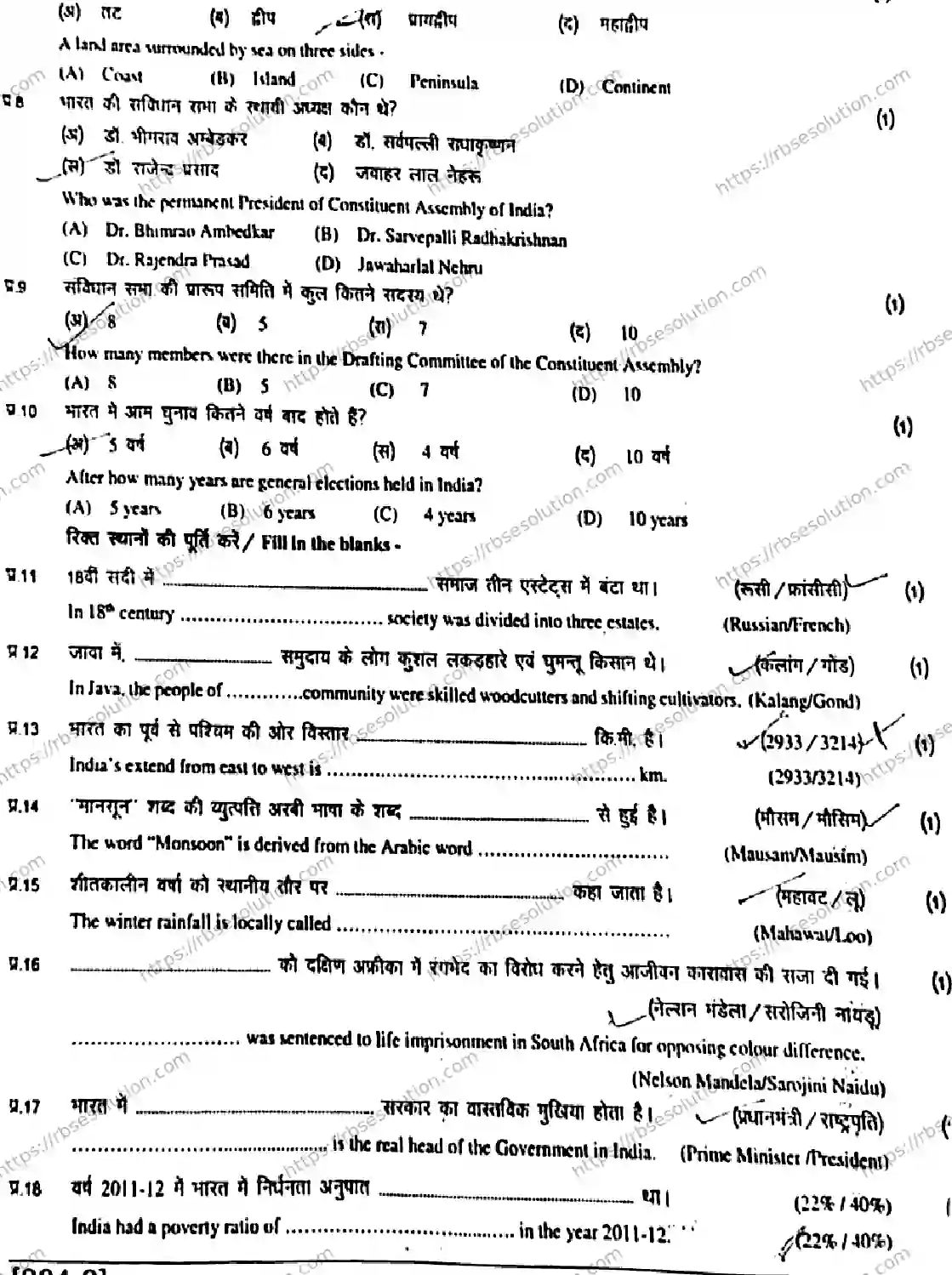
77. वह स्थल जो तीन ओर से जल से घिरा हो, कहलाता है –
- (अ) तट
- (ब) द्वीप
- (स) प्रायद्वीप
- (द) महाद्वीप
स्पष्टीकरण: प्रायद्वीप वह भू-भाग है जो तीन ओर से जल से घिरा होता है और एक ओर से भूमि से जुड़ा होता है।
78. भारत की संविधान सभा के स्थायी अध्यक्ष कौन थे?
- (अ) डॉ. भीमराव अम्बेडकर
- (ब) डॉ. सर्वपल्ली राधाकृष्णन
- (स) डॉ. राजेन्द्र प्रसाद
- (द) जवाहरलाल नेहरू
स्पष्टीकरण: डॉ. राजेन्द्र प्रसाद भारत की संविधान सभा के स्थायी अध्यक्ष चुने गए थे।
79. संविधान सभा की प्रारूप समिति में कुल कितने सदस्य थे?
- (अ) 8
- (ब) 5
- (स) 7
- (द) 9
स्पष्टीकरण: प्रारूप समिति में कुल 7 सदस्य थे, जिसके अध्यक्ष डॉ. भीमराव अम्बेडकर थे।
80. भारत में आम चुनाव कितने वर्ष बाद होते हैं?
- (अ) 5 वर्ष
- (ब) 6 वर्ष
- (स) 4 वर्ष
- (द) 10 वर्ष
स्पष्टीकरण: भारत में लोकसभा के लिए आम चुनाव प्रत्येक 5 वर्ष में होते हैं, जब तक कि इसे पहले भंग न किया जाए।
रिक्त स्थानों की पूर्ति करें / Fill in the blanks
81. 18वीं सदी में फ्रांसीसी समाज तीन एस्टेट्स में बंटा था।
उत्तर: फ्रांसीसी (French) – फ्रांसीसी क्रांति से पहले फ्रांसीसी समाज तीन वर्गों (एस्टेट्स) में विभाजित था: पादरी, कुलीन और आम जनता।
82. जावा में, कलांग समुदाय के लोग कुशल लकड़हारे एवं घुमन्तू किसान थे।
उत्तर: कलांग (Kalang) – यह जावा (इंडोनेशिया) का एक समुदाय था जो लकड़ी काटने और घुमन्तू खेती के लिए जाना जाता था।
83. भारत का पूर्व से पश्चिम की ओर विस्तार 2933 कि.मी. है।
उत्तर: 2933 कि.मी. – भारत का पूर्व-पश्चिम विस्तार लगभग 2933 किलोमीटर है।
84. 'मानसून' शब्द की व्युत्पत्ति अरबी भाषा के शब्द मौसम से हुई है।
उत्तर: मौसम (Mausam) – अरबी भाषा में 'मौसम' का अर्थ मौसम या ऋतु होता है, जिससे मानसून शब्द बना है।
85. शीतकालीन वर्षा को स्थानीय भाषा में महावत कहा जाता है।
उत्तर: महावत (Mahawat) – यह उत्तर भारत में शीतकालीन वर्षा के लिए प्रयुक्त स्थानीय शब्द है।
86. दक्षिण अफ्रीका में रंगभेद का विरोध करने हेतु नेल्सन मंडेला को आजीवन कारावास की सजा दी गई।
उत्तर: नेल्सन मंडेला (Nelson Mandela) – उन्होंने दक्षिण अफ्रीका में रंगभेद नीति के खिलाफ संघर्ष किया और 1964 में आजीवन कारावास की सजा पाई।
87. भारत में प्रधानमंत्री सरकार का वास्तविक मुखिया होता है।
उत्तर: प्रधानमंत्री (Prime Minister) – भारत में प्रधानमंत्री कार्यपालिका का प्रमुख होता है और वास्तविक शासन प्रमुख होता है, जबकि राष्ट्रपति संवैधानिक प्रमुख होता है।
88. वर्ष 2004-05 में भारत में निर्धनता अनुपात 22% था।
उत्तर: 22% – सरकारी आंकड़ों के अनुसार, 2004-05 में भारत में गरीबी रेखा से नीचे जीवन यापन करने वालों का अनुपात लगभग 22% था।
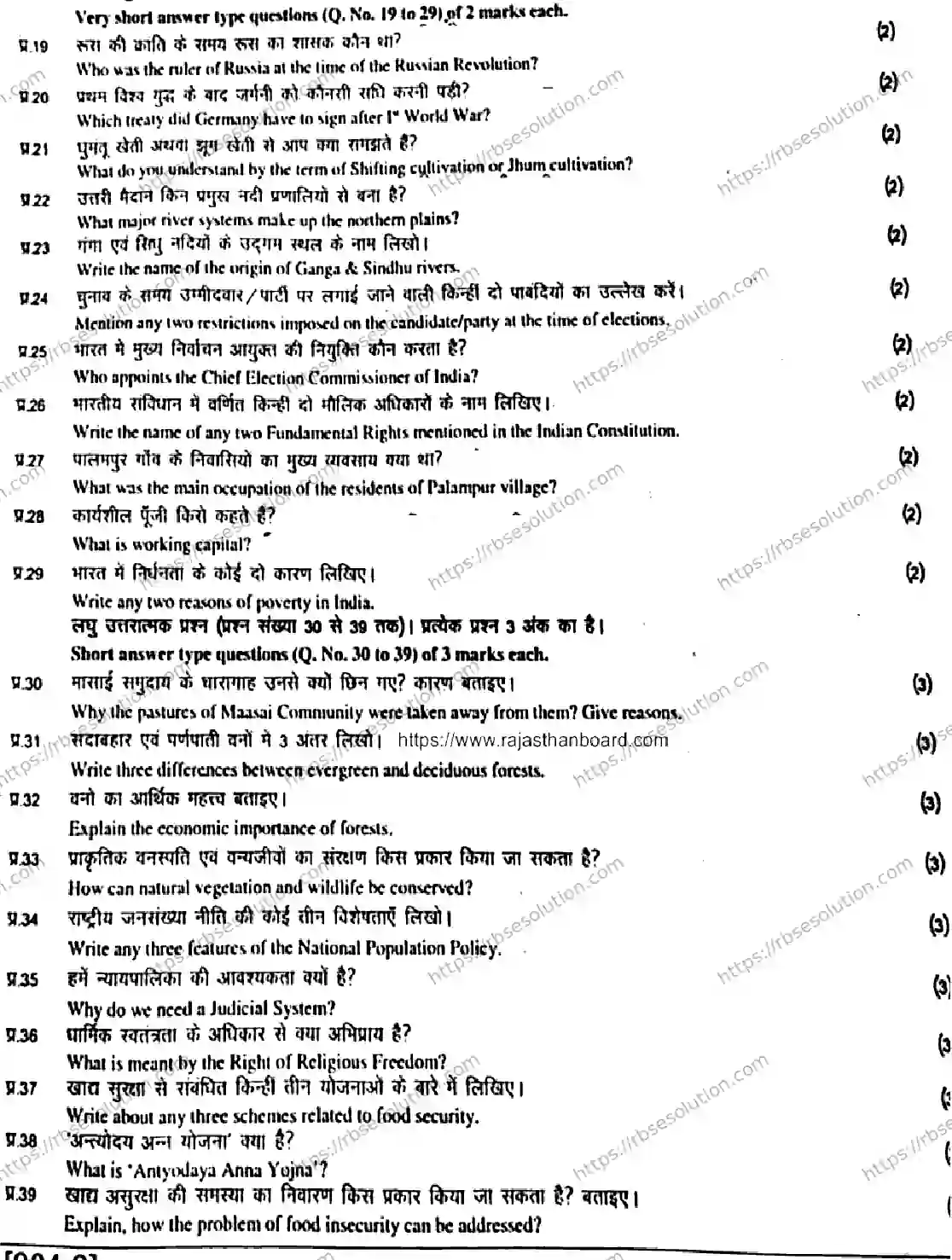
Very Short Answer Type Questions (Q. No. 19 to 29) of 2 marks each.
-
प्रश्न 19: रूस की क्रांति के समय रूस का शासक कौन था?
Who was the ruler of Russia at the time of the Russian Revolution?उत्तर: रूस की क्रांति के समय रूस का शासक ज़ार निकोलस द्वितीय (Tsar Nicholas II) था।
Answer: The ruler of Russia at the time of the Russian Revolution was Tsar Nicholas II.
-
प्रश्न 20: प्रथम विश्व युद्ध के बाद जर्मनी को कौनसी संधि करनी पड़ी?
Which treaty did Germany have to sign after World War I?उत्तर: प्रथम विश्व युद्ध के बाद जर्मनी को वर्साय की संधि (Treaty of Versailles) पर हस्ताक्षर करने पड़े।
Answer: After World War I, Germany had to sign the Treaty of Versailles.
-
प्रश्न 21: स्थानांतरित खेती अथवा झूम खेती से आप क्या समझते हैं?
What do you understand by the term Shifting cultivation or Jhum cultivation?उत्तर: स्थानांतरित खेती (झूम खेती) एक प्रकार की कृषि पद्धति है जिसमें किसान जंगल के एक हिस्से को साफ करके फसल उगाते हैं, और जब भूमि की उर्वरता कम हो जाती है, तो वे दूसरे स्थान पर चले जाते हैं। यह मुख्यतः पूर्वोत्तर भारत में प्रचलित है।
Answer: Shifting cultivation (Jhum cultivation) is an agricultural practice where farmers clear a patch of forest, grow crops, and when soil fertility declines, they move to another area. It is mainly practiced in Northeast India.
-
प्रश्न 22: उत्तरी मैदान किन प्रमुख नदी प्रणालियों से बना है?
What major river systems make up the northern plains?उत्तर: उत्तरी मैदान तीन प्रमुख नदी प्रणालियों से बना है: सिंधु नदी प्रणाली, गंगा नदी प्रणाली, और ब्रह्मपुत्र नदी प्रणाली।
Answer: The northern plains are formed by three major river systems: the Indus river system, the Ganga river system, and the Brahmaputra river system.
-
प्रश्न 23: गंगा एवं सिंधु नदियों के उदगम स्थल के नाम लिखिए।
Write the name of the origin of Ganga & Sindhu rivers.उत्तर: गंगा नदी का उद्गम गंगोत्री हिमनद (उत्तराखंड) से होता है, और सिंधु नदी का उद्गम तिब्बत में मानसरोवर झील के पास से होता है।
Answer: The Ganga river originates from the Gangotri Glacier (Uttarakhand), and the Sindhu (Indus) river originates near Mansarovar Lake in Tibet.
-
प्रश्न 24: चुनाव के समय उम्मीदवार / पार्टी पर लगाई जाने वाली किन्हीं दो पराबंदियों का उल्लेख करें।
Mention any two restrictions imposed on the candidate/party at the time of elections.उत्तर: दो पराबंदियाँ: (1) कोई भी उम्मीदवार चुनाव प्रचार के दौरान धर्म, जाति या समुदाय के आधार पर वोट नहीं मांग सकता। (2) चुनाव खर्च की एक निर्धारित सीमा होती है, जिसे पार नहीं किया जा सकता।
Answer: Two restrictions: (1) No candidate can seek votes on the basis of religion, caste, or community during election campaigning. (2) There is a fixed limit on election expenses that cannot be exceeded.
-
प्रश्न 25: भारत में मुख्य निर्वाचन आयुक्त की नियुक्ति कौन करता है?
Who appoints the Chief Election Commissioner of India?उत्तर: भारत में मुख्य निर्वाचन आयुक्त की नियुक्ति राष्ट्रपति (President) द्वारा की जाती है।
Answer: The Chief Election Commissioner of India is appointed by the President.
-
प्रश्न 26: भारतीय संविधान में वर्णित कोई दो मौलिक अधिकारों के नाम लिखिए।
Write the name of any two Fundamental Rights mentioned in the Indian Constitution.उत्तर: दो मौलिक अधिकार: (1) समानता का अधिकार (अनुच्छेद 14-18), (2) स्वतंत्रता का अधिकार (अनुच्छेद 19-22)।
Answer: Two Fundamental Rights: (1) Right to Equality (Articles 14-18), (2) Right to Freedom (Articles 19-22).
-
प्रश्न 27: पालमपुर गाँव के निवासियों का मुख्य व्यवसाय क्या था?
What was the main occupation of the residents of Palampur village?उत्तर: पालमपुर गाँव के निवासियों का मुख्य व्यवसाय कृषि (खेती) था।
Answer: The main occupation of the residents of Palampur village was agriculture (farming).
-
प्रश्न 28: कार्यशील पूँजी किसे कहते हैं?
What is working capital?उत्तर: कार्यशील पूँजी वह पूँजी है जिसका उपयोग उत्पादन के लिए कच्चे माल, मजदूरी, बिजली आदि पर खर्च करने के लिए किया जाता है। यह उत्पादन की दैनिक आवश्यकताओं को पूरा करती है।
Answer: Working capital is the capital used to spend on raw materials, wages, electricity, etc., for production. It meets the daily needs of production.
-
प्रश्न 29: भारत में निर्धनता के कोई दो कारण लिखिए।
Write any two reasons of poverty in India.उत्तर: दो कारण: (1) शिक्षा और कौशल की कमी के कारण रोजगार के अवसर सीमित होना। (2) भूमि और अन्य संसाधनों का असमान वितरण।
Answer: Two reasons: (1) Limited employment opportunities due to lack of education and skills. (2) Unequal distribution of land and other resources.
Short Answer Type Questions (Q. No. 30 to 39) of 3 marks each.
-
प्रश्न 30: मासाई समुदाय के चारागाह उनसे क्यों छिन गए? कारण बताइए।
Why the pastures of Maasai Community were taken away from them? Give reasons.उत्तर: मासाई समुदाय के चारागाह निम्नलिखित कारणों से छिन गए: (1) औपनिवेशिक सरकारों ने बड़े पैमाने पर भूमि को वन्यजीव अभयारण्यों और राष्ट्रीय उद्यानों में बदल दिया। (2) यूरोपीय बसने वालों ने खेती और पशुपालन के लिए बड़े क्षेत्रों पर कब्जा कर लिया। (3) सरकार द्वारा चारागाहों को आरक्षित वन घोषित कर दिया गया, जिससे मासाई को वहां चराने की अनुमति नहीं थी।
Answer: The pastures of the Maasai community were taken away due to: (1) Colonial governments converted large areas into wildlife sanctuaries and national parks. (2) European settlers occupied large areas for farming and ranching. (3) The government declared pastures as reserved forests, preventing the Maasai from grazing there.
-
प्रश्न 31: सदाबहार एवं पर्णपाती वनों में 3 अंतर लिखिए।
Write three differences between evergreen and deciduous forests.क्रमांक सदाबहार वन (Evergreen Forests) पर्णपाती वन (Deciduous Forests) 1 पूरे वर्ष हरे-भरे रहते हैं; पत्तियाँ एक साथ नहीं गिरतीं। शुष्क मौसम में पत्तियाँ झड़ जाती हैं। 2 अधिक वर्षा (200 सेमी से अधिक) वाले क्षेत्रों में पाए जाते हैं। मध्यम वर्षा (100-200 सेमी) वाले क्षेत्रों में पाए जाते हैं। 3 इनमें लकड़ी कठोर और टिकाऊ होती है (जैसे, महोगनी, आबनूस)। इनमें लकड़ी मुलायम होती है (जैसे, साल, सागौन)। Answer: (1) Evergreen forests remain green throughout the year; leaves do not fall all at once. Deciduous forests shed leaves in the dry season. (2) Evergreen forests are found in areas with high rainfall (over 200 cm); deciduous forests in moderate rainfall (100-200 cm). (3) Evergreen forests have hard, durable wood (e.g., mahogany, ebony); deciduous forests have softer wood (e.g., sal, teak).
-
प्रश्न 32: वन का आर्थिक महत्व बताइए।
Explain the economic importance of forests.उत्तर: वनों का आर्थिक महत्व: (1) वन लकड़ी, ईंधन, फल, औषधीय पौधे, रबर, गोंद आदि प्रदान करते हैं। (2) वन उद्योगों (जैसे, कागज, फर्नीचर) के लिए कच्चा माल देते हैं। (3) वन रोजगार के अवसर प्रदान करते हैं और पर्यटन को बढ़ावा देते हैं। (4) वन जलवायु को नियंत्रित करके कृषि उत्पादन में सहायक होते हैं।
Answer: Economic importance of forests: (1) Forests provide wood, fuel, fruits, medicinal plants, rubber, gum, etc. (2) They supply raw materials for industries (e.g., paper, furniture). (3) Forests create employment opportunities and promote tourism. (4) They help in agricultural production by regulating climate.
-
प्रश्न 33: प्राकृतिक वनस्पति एवं वन्यजीवों का संरक्षण क